


Analysis
Speaking out
The NALSAR row shows how judicial outreach increasingly invites dialogue, dissent and demands for transparency
Six months before the NALSAR row, Chief Justice Surya Kant urged the graduating class of National Law University, Jodhpur, that they should become the “architects of open forums”, rather than “guardians of closed citadels.” The March edition of the Supreme Court Chronicle recorded his remarks of how informal campus debates are formative spaces, warning against law becoming inaccessible through complexity and jargon.
In hindsight, that entry feels almost prophetic.
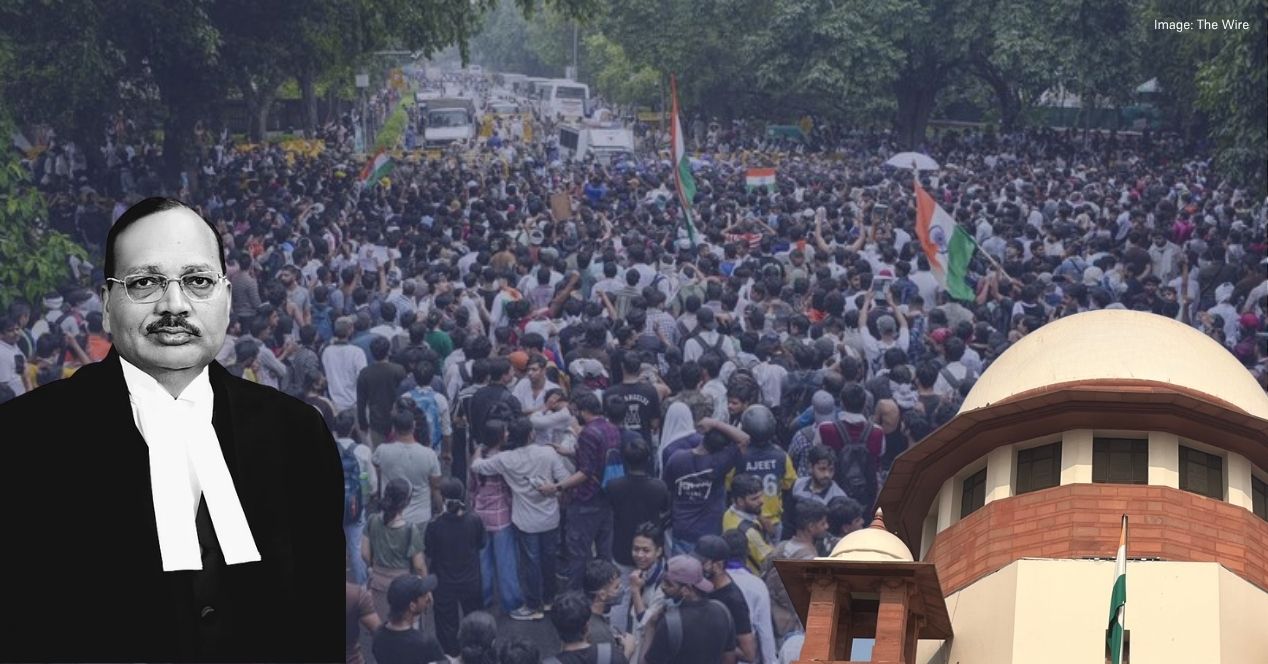
In July, 70 students from NALSAR’s graduating batch asked their university to reconsider inviting the Chief Justice to its convocation. 380 students from the junior batches expressed solidarity. Their objection arose from remarks attributed to the CJI during a 22 July hearing concerning alleged police action against student protesters in Delhi.
Then the Bar Council of India’s Chairman—Manan Kumar Mishra—entered the conversation, directing the State Bar Councils not to enrol NALSAR’s 2026 batch. The direction was withdrawn hours later. The next day, in Mihira Sood v Bar Council of India (2026), a Supreme Court Bench led by CJI Surya Kant protected the students and faculty from any punitive action connected with the episode. The Chief remarked: “It’s a dialogue between me and students.” The BCI, he added, had no business interfering. On 17 August, he also clarified that he had never consented to attend NALSAR’s convocation.
The reaction has travelled beyond Hyderabad. Students and alumni at NLSIU, Bengaluru, have objected to the participation of both CJI Surya Kant and BCI Chairman Mishra at their forthcoming convocation. The institutional relationship there is especially close. The CJI is NLSIU’s Chancellor, while the BCI Chairman presides over its General Council meetings.
CJI Surya Kant’s emphasis on “dialogue” matters. It does not question whether the students were sufficiently respectful, but focuses on how it is only an outcome of the outreach that the Court has undertaken through public engagements. Our analysis of CJI D.Y. Chandrachud’s tenure noted how extensive engagements invite attention to an otherwise opaque institution. The visibility has not waned. The NALSAR episode only reflects a new dynamic: students are no longer passive spectators.
All this makes the Court’s archival practice more important. The Supreme Court Chronicle documents the Court’s activities “both within and beyond the courtroom”. It performs valuable institutional work, but it generally summarises public engagements rather than publishing authenticated transcripts. Meanwhile, the Supreme Court’s dedicated Speeches page has no speech by a sitting CJI after January 2014. Its only later entry is a 2016 lecture by former CJI M.N. Venkatachaliah.
So a curious gap has opened. Judges speak more often, their remarks travel faster and fragments from courtrooms and public events circulate instantly. Yet, someone looking for the complete authorised text of a recent CJI speech can only hope to get its summary in the Chronicle or a university page.
Authorised versions of what the judges may have observed during the proceedings of a case—except Constitution Benches—are harder to obtain. The Court does not release them. Whether the NALSAR controversy could have been avoided had an authoritative transcript of the hearing been released—framing the CJI’s remarks in their full context—remains a subject of debate. Such release would have at least recorded the Court’s authentic version, countering the impression created by media reporting. CJI Surya Kant’s clarifications to individual journalists failed to convince the agitating students. Ultimately, it revealed that the Court is yet to bridge the divide between institutional facts and public perception.
A reliable archive cannot eliminate ideological disagreement. It can, however, ensure that disagreement begins with a common record. The Court already has the pieces: a speeches page, a monthly Chronicle, webcasts and an expanding digital archive. Bringing them together into a searchable repository of authorised speeches, transcripts and recordings of even stray observations of Judges during the hearings and those made outside the Court would require modest institutional effort.
If law schools are to be open forums, judges will sometimes encounter applause and sometimes dissent. That is the point of a forum. The next step is simpler: preserve the conversation so everyone can see what was actually said.
This article was first featured in SCO’s Weekly newsletter. Sign up now!
Related articles
Analysis
Law, history, and ideas of India
79 years into India’s independence from the British Raj, “Swadeshi jurisprudence” gains traction in courts and colleges
Analysis
Learning and unlearning
The Supreme Court’s latest report on gender asks a question that appeals rarely do: how do judges learn to write?
Analysis
An exercise in introspection
Justice Bhuyan’s recent speech brought back questions on public engagements by judges
Analysis
The week that was
While the Court’s not mandated to intervene in the protests, its response at the first instance shaped the public perception towards it