


Analysis
Learning and unlearning
The Supreme Court’s latest report on gender asks a question that appeals rarely do: how do judges learn to write?
One of the first briefs I worked on as an Advocate at the Calcutta High Court was a matrimonial dispute. The counsel for the husband had argued that the wife did not deserve maintenance as she drank alcohol and smoked tobacco. I found the argument too absurd to survive more than a few minutes. To my surprise, the judge, herself a woman, agreed that drinking and smoking by a woman were “not part of our culture”. The observation was recorded in the judgement.
That was the only matrimonial case I worked on. Years later, I moved to Court Reporting, writing about high stakes constitutional matters at the Supreme Court. The work made me realise that judgements have a curious afterlife. They find place on legal databases, summarised in law reports, cited in written submissions and relied on by counsel in oral arguments. A passing observation about a litigant’s conduct can travel multiple channels, before anyone stops to ask where it came from.
The Calcutta High Court judge’s remark is not an isolated instance, similar stereotypes or expectations continue to seep into judicial thinking and decision-making. In March last year, the Allahabad High Court had held that grabbing a minor girl’s breasts, breaking the string of her pyjamas and attempting to pull them down amounted only to “preparation” to commit rape, as opposed to “attempt to rape”. The Supreme Court intervened. In February 2026, it observed that efforts to encourage sensitivity in cases involving sexual offences had “not borne the fruit that was expected”.
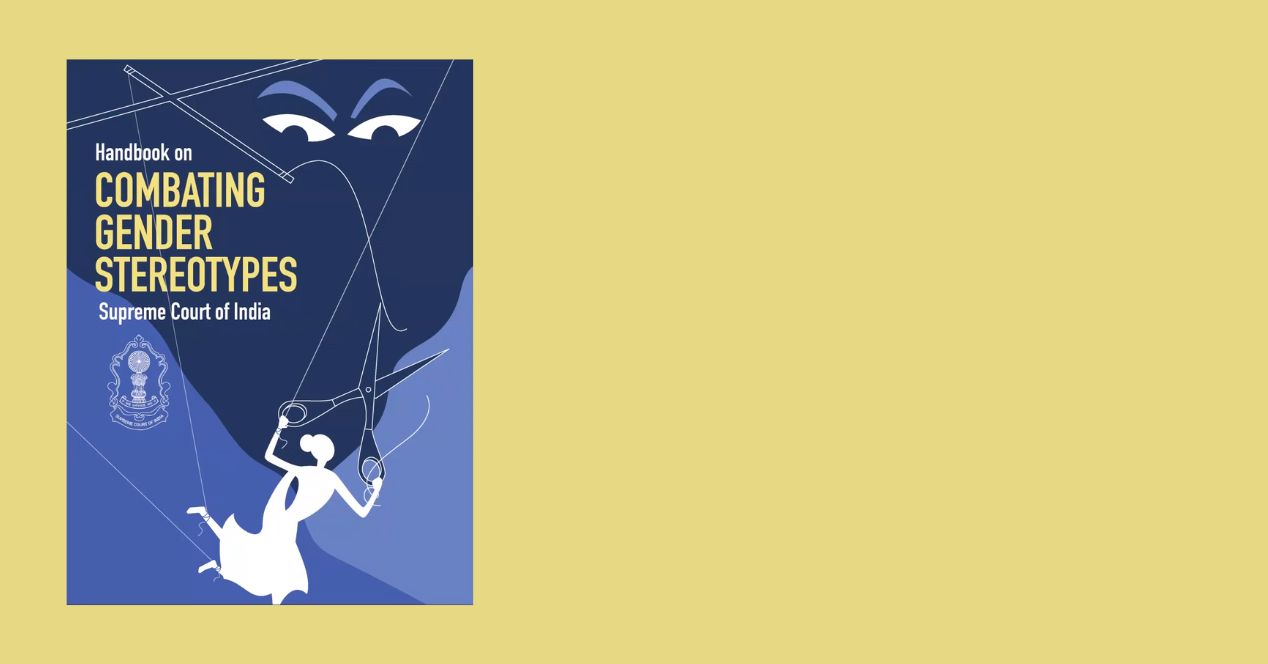
The Allahabad High Court decision came despite earlier attempts through judgements, administrative circulars and even the Supreme Court’s 2023 Handbook on Combating Gender Stereotypes. The Court recognised that any change must come from judicial training and asked the National Judicial Academy (NJA) to weigh in. Justice Aniruddha Bose, the Director of the NJA, chaired a committee to study how judges approached such cases and recommend changes. The Court noted that judicial decisions must reflect “the ethos of compassion, humanity and understanding.”
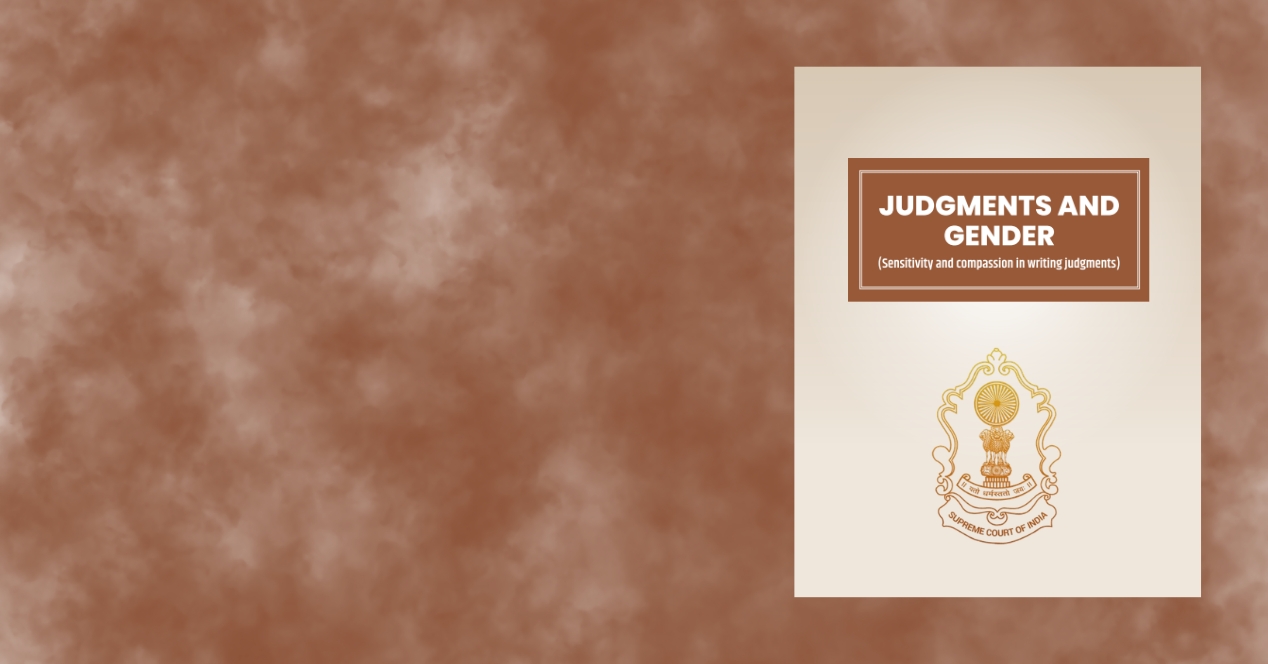
While there was the 2023 Handbook, Chief Justice Surya Kant described it as“too Harvard-oriented”, preferring guidelines written in simpler language. The Committee reviewed 125 trial court and High Court judgements, surveyed judicial officers, survivors, witnesses, and consulted lawyers, psychologists and academics. The resulting report, Judgements and Gender: Sensitivity and Compassion in Writing Judgements, examined the habits reflected in judicial writing.
The report found women routinely described as “helpless females” or “a woman of easy virtue”. Sexual violence continued to be framed through ideas of “lost chastity” and “destroyed souls”, while judgements reproduced graphic descriptions of assaults long after the legal issues had been resolved. Survivors recounted dismissive remarks from police and other authorities, including “Ghar ki baat hai, itna kya ho gaya?” (It’s an internal family matter, why make a big deal out of it?) and “Aap iss tarah kapde pehen kar rehti hain?” (Is this how you normally dress?)
These habits do not alter the outcome of a case, but they shape how the law speaks to those who come before it. “A graphic description of the offending act in a judgment multiplies the victim’s trauma” the report observes. It asks judges to abandon terms such as prosecutrix, references to “outraged modesty” and suggestions that an assault has “ruined” a woman’s life, confining themselves to facts necessary to decide the dispute. It recommends that emotional intelligence accompany legal knowledge, that witnesses be treated as “guests”, that humiliating cross-examinations be curtailed, and that judicial reasoning rest on bodily autonomy and constitutional dignity.
The Supreme Court’s concern with judicial language has developed over decades. In Joseph Shine v Union of India (2018), Justice D.Y. Chandrachud rejected “anachronistic conceptions of ‘chastity’ and ‘honour’” that confined women within impossible expectations. The 2023 Handbook was built on that reasoning. It urged judges to abandon terms such as “adulteress”, “prostitute”, “housewife” and “eve teasing”. Parliament had recognised the principle years earlier when it replaced the word “pauper” in the Code of Civil Procedure, 1908, with “indigent person”.
The conversation stretches back further. Bharwada Bhoginbhai Hirjibhai v State of Gujarat (1983) held that survivor’s testimony does not require corroboration, recognising the social stigma of reporting sexual violence. Lillu @ Rajesh v State of Haryana (2013) buried the two-finger test, while Aparna Bhat v State of Madhya Pradesh (2021) prohibited reasoning rooted in gender stereotypes and directed gender-sensitisation of judicial officers.
The Report, though not perfect, is the latest in a series of attempts to prevent stereotypes from distorting judicial outcomes. While it may not immediately alter ingrained mindsets, it draws a firm line around how the law speaks. I no longer remember the names of the parties in that matrimonial dispute; I remember the sentence. Perhaps that is the point.
This article was first featured in SCO’s Weekly newsletter. Sign up now!
Related articles
Analysis
From Boston to Bhopal? The SC’s new publication on gender stereotypes
While the 2026 Report promises more practical training for judges, it may turn out less useful to tackle all kinds of gender stereotypes
Analysis
Supreme Court handbook on gender stereotypes: Progressive, but will the law catch up?
A new publication from the apex court acknowledges that ‘stereotypical language’ reinforces ideas contrary to constitutional ethos