


Analysis
Vanashakti III restores rule and exception
A three-Judge Bench declares prior clearance mandatory, corrects the precedent record, and forgives every project already in the pipeline.

On 29 July, a three-Judge Bench of Chief Justice Surya Kant and Justices Joymalya Bagchi and V.M. Pancholi delivered the final judgement in Vanashakti v Union of India. The litigation centres on the Union’s use of executive instruments to carve exceptions for construction and industry projects that commenced without prior environmental clearance (EC) mandated by the Environmental Impact Assessment (EIA) notification of 2006. The instruments under scrutiny were a 2017 notification which opened a six-month window for violators to obtain ex post-facto clearances, and a 2021 office memorandum that extended this relief indefinitely. Authored by Justice Bagchi, the Judgement affirmed the mandatory nature of prior clearance, upheld the 2017 notification and quashed the 2021 memorandum with prospective effect. It leaves undisturbed every ex post-facto clearance already granted.
Vanashakti-I and II
The Bench’s first task was to address the tumultuous history of Vanashakti decisions. On 16 May 2025, a Bench of Justices A.S. Oka and Ujjal Bhuyan had struck down both instruments (Vanashakti-I). On 18 November 2025, the Court recalled this decision in a 2:1 majority, restoring the instruments and upholding the validity of retrospective ECs in exceptional circumstances (Vanashakti-II). While former CJI B.R. Gavai and Justice K.V. Chandran formed the majority, Justice Bhuyan dissented from the recall. However, their decision did not conclude the matter. Disagreeing with parties opposing the present petitions, the July 2026 Bench held that when a bench speaks through multiple opinions, the ratio is confined to matters the majority concur upon. While Justice Chandran had concurred upon admission of the review petition, he had expressly left the validity of the two instruments open. The recall, in other words, supplied a clean slate for fresh hearings and not a verdict.
The precedent record
Common Cause v Union of India (2017) and Alembic Pharmaceuticals v Rohit Prajapati (2020) had declared retrospective clearance alien to environmental jurisprudence, while moulding relief under Article 142 that stopped short of demolition. However, Electrosteel Steels v Union of India (2021) observed that the Environment (Protection) Act, 1986 does not itself prohibit ex post facto clearances, a proposition that Pahwa Plastics v Dastak NGO and D. Swamy v Karnataka State Pollution Control Board later followed.
In Vanashakti-II, the Bench questioned the reliance on Common Cause and Alembic in a manner that focused on individual results over universal legal principles. Restoring the two precedents, the July 2026 Bench held Electrosteel’s observation incorrect for overlooking the mandatory character of the unamended 2006 EIA Notification. Pahwa and D. Swamy stand overruled to the extent they treated the 2021 OM as validly traceable to the 2017 notification, a linkage the Bench found the memorandum’s own recitals do not support.
Yet the Bench declined to read Common Cause and Alembic as foreclosing the Union’s power to amend its own notification. Section 3 of the 1986 Act, read with Section 21 of the General Clauses Act, 1897, permit the delegate to carve a bounded exception into the regime it created, provided the exception survives two tests: an intelligible differentia under Article 14 tied to the Act’s object, and a proportionality analysis in which the public interest invoked must supervene that of the violator. Tested against those standards, the Judgement found the 2017 notification valid as it was a narrowly tailored, time-bound measure while the 2021 memorandum failed for lacking both a cut-off date and a defined class.
Relief for projects already in the pipeline
Invoking Article 142, the Bench confined the quashing of the 2021 memorandum to prospective effect, citing over two years of oscillating orders and the scale of public infrastructure at stake, from a proposed hospital in Odisha to an airport in Karnataka. Every clearance already granted survives unless individually challenged and only fresh applications are barred.
Justice Bhuyan’s dissent to the recall gains an odd vindication here. He had written that the individual applicants’ grievances could be met “by way of appropriate clarification and/or modification of paragraph 35 of the Vanashakti judgment,” without recalling the judgement in full. The 2026 Bench’s decision arrives close to that position, though by the longer road of a full recall and a fresh hearing.
Breaking new ground on official accountability, the Judgement observed that when the state is the violator, “the preserver of the rule of law is seen violating the law.” It directed that future amnesty schemes carry disciplinary and personal-liability consequences for responsible officials under Section 15B of the 1986 Act, inserted by the Jan Vishwas (Amendment of Provisions) Act, 2023.
Principles of environmental law
One passage merits closer attention than it received from the Bench. The petitioners had invoked the principle of non-regression, which forbids rolling back existing levels of environmental protection. The Bench treated it as persuasive soft law incapable of fettering the sovereign power to recalibrate environmental measures. It supported this point by noting the United States’ January 2026 withdrawal from the Paris Agreement and its move to withdraw from the UN Framework Convention on Climate Change as well. The observation sits oddly as a justification. It calibrates the floor of an Article 21 right by reference to the conduct of the very nations it identifies as historically the largest carbon emitter.
What survives, on balance, is a doctrine more defensible than the one it replaces, and a relief more generous than the doctrine strictly allows. The Bench corrected misapplication of the precedent record, confined a recall to its narrowest legitimate reach, and restored a mandatory reading of the prior-clearance rule supplied by Vanashakti-I and unsettled by the Review. Yet the same Judgement that faults the 2021 memorandum for placing “the errant proponent substantially on par with the law-abiding one” performs a version of that equation for every applicant already filed. Three judgements and 14 months down the line, the doctrine has been rebuilt. Its strength will depend less on this Judgement’s reasoning and more on the frequency with which the now-legitimised exceptions are invoked.
Related articles
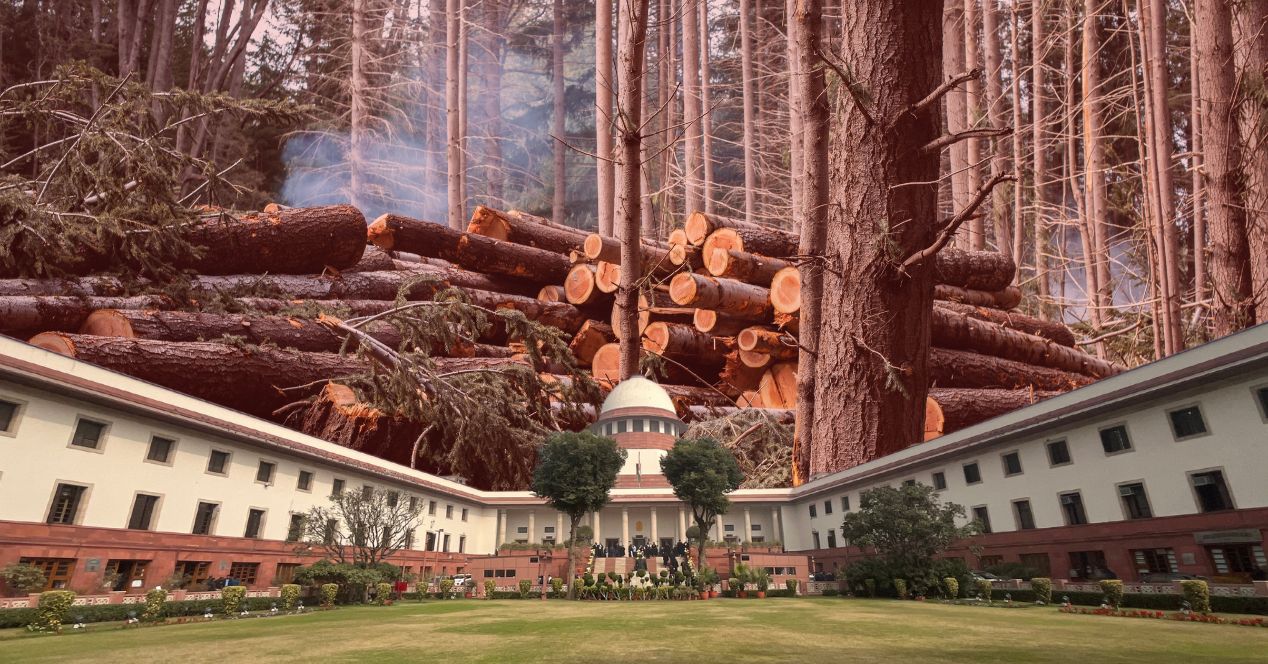
Analysis
Vanashakti Review: Demoting the law to a suggestion
In permitting retrospective environmental clearances, the Court subverts legal principles and turns the rule of precedents on its head
Analysis
2026 Supreme Court mid-year review: Environmental and animal rights
The Supreme Court restructured decade-old litigations and delivered a range of firm environmental rulings in the first-half
Analysis
Adjudicating the Environmental Juristocracy | Highlights from the Courts and Constitution Conference 2026
Find out what the panel discussed on the recent interventions from the Court in matters of environmental conversation
Analysis
Supreme Court Review 2025: Lacking a principled stance on environmental rights
In trying to strike balance between environmental rights and the development imperative, the SC delivered a mixed bag of verdicts in 2025