


Analysis
Supreme Court Review 2025: Seven new judges appointed to the top court
Two future Chief Justices of India were elevated in 2025; the year closed with 33 sitting judges
The Supreme Court Collegium, currently led by Chief Justice Surya Kant, recommends judges for elevation to both the High Courts and the Supreme Court. According to the Memorandum of Procedure (MoP), the three senior-most judges of the Supreme Court recommend names for High Court appointments, while the five senior-most judges recommend elevations to the Supreme Court.
In 2025, the Collegium underwent three distinct transitions as leadership shifted. In early 2025, CJI Sanjiv Khanna led the Collegium until his retirement in May 2025. CJI B.R. Gavai then assumed leadership and served until his retirement in November 2025.
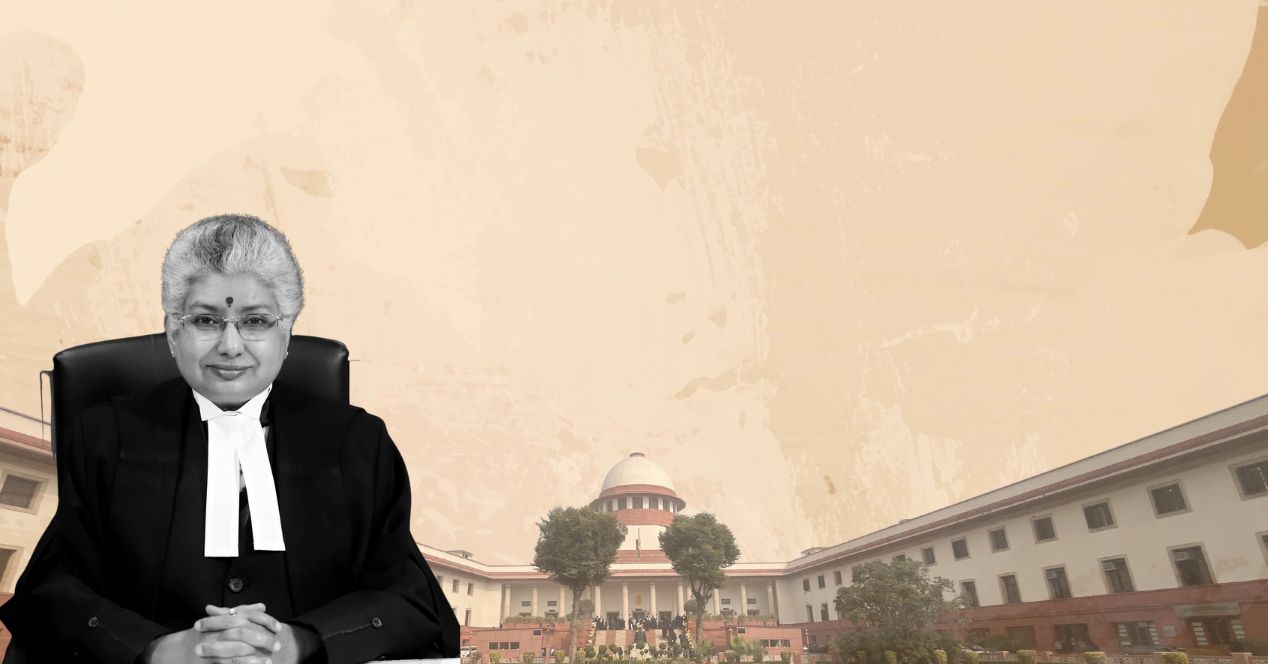
Presently, CJI Surya Kant heads the latest iteration of the Collegium. Its current members include Justices Vikram Nath, J.K. Maheshwari, B.V. Nagarathna and M.M. Sundresh.
The Supreme Court saw seven new judges this year, all recommended by the Collegiums led by CJI Khanna and CJI Gavai. Despite one vacancy remaining at the end of the year, the Surya Kant-led Collegium has not yet made any recommendation for elevation to the Supreme Court.
Factors for appointments
The Collegium resolutions never fully reveal the considerations deliberated during its meetings. However, the resolutions identify five broad parameters:
- The seniority of the judges;
- Merit as demonstrated by the judgements and performance of the judges;
- Integrity;
- The need to ensure diversity in terms of region, gender and community; and
- The need for inclusion of marginalised and backward segments of the community
Justice K.V. Chandran | Date of appointment: 16 January 2025
The Collegium recommended Justice Chandran on 7 January 2025. The Resolution recorded that he was appointed as a judge of the Kerala High Court on 8 November 2011 and served there until March 2023, when he was elevated as the Chief Justice of the Patna High Court. The resolution noted that his experience as a puisne judge and a Chief Justice of “a big High Court” allowed him to acquire “significant experience in diverse fields of law.”
At the time of his elevation, Justice Chandran held serial number 13 on the all-India seniority list of High Court judges. The Collegium noted that Justice Chandran’s elevation would provide representation for the Kerala High Court, which had no sitting judge on the Supreme Court following the retirement of Justice C.T. Ravikumar on 5 January. The Collegium issued Justice Chandran’s recommendation within two days of that retirement.
During his first year, Justice Chandran sat on several notable benches. These included decisions upholding retrospective environment clearances, adjudicating scope of the Aravalli hills and ranges, and clarifying the circumstances in which advocates may be summoned for giving legal opinions or representing parties under criminal investigation.
According to Manupatra, Justice Chandran authored 99 judgments during his first year at the top court.
Justice Chandran will retire on 24 April 2028.
Justice Joymalya Bagchi | Date of appointment: 17 March 2025
Justice Bagchi was the second judge elevated to the Supreme Court by the Khanna-led Collegium in 2025. His recommendation was institutionally notable because the Collegium expressly wrote that Justice Bagchi would become the Chief Justice of India in 2031. The resolution also noted that the Supreme Court had lacked a CJI from the Calcutta High Court since the retirement of CJI Altamas Kabir in July 2013.
Until Justice Bagchi’s appointment, the Collegium primarily focused on merit, integrity, competence, and religious, caste, gender and regional representation. With Justice Bagchi’s elevation, the Collegium introduced a new factor for consideration in appointments.
Justice Bagchi sits on the Bench currently hearing the challenge against the Special Intensive Revision of Electoral Rolls in Bihar and the Ranveer Allahabadia controversy. He also served on the Constitution Bench that framed guidelines for the progression of civil judges in the district judiciary. According to Manupatra, Justice Bagchi has authored 21 judgements so far.
Justice Bagchi will retire on 2 October 2031.
Justice N.V. Anjaria | Date of appointment: 30 May 2025
The Collegium led by CJI Gavai recommended Justice Anjaria as a Judge, along with Justices Vijay Bishnoi and A.S. Chandurkar. The recommendation came within days of CJI Khanna’s retirement. Unlike earlier Resolutions, the recommendation for Justice Anjaria and the others did not mention specific factors considered by the Collegium. This marked a shift from the Collegiums led by CJI Khanna and his predecessor CJI D.Y. Chandrachud, who had institutionalised explanations and reasoning for judicial appointments.
Justice Anjaria hails from the Gujarat High Court, where he was appointed as a Judge in November 2011. He was elevated to Chief Justice of the Karnataka High Court in February 2025. His served at the Karnataka High Court for over a year, until his elevation to the Supreme Court within three months. At the time of his appointment, Justices J.B. Pardiwala and Bela Trivedi were the sitting judges from the Gujarat High Court at the Supreme Court. Justice Trivedi retired on 9 June.
According to Manupatra, Justice Anjaria has authored 21 judgements.
Justice Anjaria will retire on 22 March 2030.
Justice Vijay Bishnoi | Date of appointment: 30 May 2025
Justice Bishnoi was elevated alongside Justice Anjaria. He hails from the Rajasthan High Court, where he was appointed as a Judge in January 2013. Eleven years later, he was elevated to Chief Justice of the Gauhati High Court, where he served for more than a year until his elevation to the Supreme Court. At the time of his appointment, only Justice Sandeep Mehta represented the Rajasthan High Court. His appointment increased Rajasthan’s representation to two judges.
Justice Bishnoi has authored six judgements at the Supreme Court so far. He will retire on 25 March 2029 after four years on the Bench.
Justice A.S. Chandurkar | Date of appointment: 30 May 2025
Justice Chandurkar was the third judge appointed alongside Justices Anjaria and Bishnoi. He was appointed as a Judge of the Bombay High Court in June 2013, and served there until his elevation. At the time of his appointment, CJI Gavai and Justice P.B. Varale were the only judges from the Bombay High Court. Justice Chandurkar’s appointment increased that representation to three. Following the retirement of CJI Gavai, two judges from Bombay remain.
Justice Chandurkar has authored 12 judgements at the Supreme Court so far. He will retire on 6 April 2030.
Justice Alok Aradhe | Date of appointment: 29 August 2025
The Collegium recommended Justice Aradhe alongside Justice Vipul Pancholi on 25 August 2025. The resolution did not record any reasons for their elevation beyond identifying their parent High Courts.
Justice Aradhe hails from the Madhya Pradesh High Court. At the time, Justices J.K. Maheshwari and S.C. Sharma represented Madhya Pradesh on the Court. Justice Aradhe’s appointment increased that count to three.
Although Justice Aradhe began his judicial career at the Madhya Pradesh High Court (2009), he also served at the Jammu and Kashmir High Court (2016), the Karnataka High Court (2018), and as Chief Justice of the Telangana High Court (2023) prior to his Supreme Court appointment.
Justice Aradhe has authored nine judgements in the Supreme Court so far and will retire on 12 April 2029.
Justice Vipul Pancholi | Date of appointment: 29 August 2025
Justice Pancholi’s elevation was the most controversial appointment of 2025. After the publication of the recommendation, reports emerged that Justice B.V. Nagarathna, a member of the Collegium, had dissented. According to news reports citing the dissent, Justice Nagarathna challenged the recommendation and argued it would be counter-productive for the judiciary. The reports also revealed that Justice Pancholi’s transfer from the Gujarat High Court to the Patna High Court occurred for undisclosed reasons; Justice Nagarathna prompted the Collegium to refer to the minutes of the meeting regarding that transfer.
Interestingly, Justice Pancholi is also in line to become the CJI—a factor the Collegium acknowledged, as revealed during Justice Bagchi’s elevation. After his retirement, CJI Gavai revealed that Justice Nagarathna’s dissent did not convince the other Collegium members, indirectly confirming the internal disagreement over Justice Pancholi’s appointment.
Justice Pancholi has authored 10 judgements in the Supreme Court so far and will retire on 27 May 2033 after a tenure of over seven years.
Transparency or damage control?
While 2025 did not witness sustained criticism of individual appointments, the year posed a broader challenge to the credibility of the Collegium system itself. The discovery of half-burnt currency notes at the residence of former Delhi High Court Judge Yashwant Varma (now in the Allahabad High Court) sparked a controversy that undermined the Collegium system’s credibility.
In the aftermath, the CJI Khanna-led Collegium released three distinct documents detailing the process of Collegium recommendations and judicial appointments in the High Courts and the Supreme Court. These documents revealed details regarding caste identity and the relationships of candidates with sitting judges—specifically those the Collegium approved for High Court elevation since November 2022 (when CJI Chandrachud took office). This was an unprecedented move. The timing suggests this transparency was a response to the Justice Varma controversy. This practice was continued under CJI Gavai.
However, the disclosures stopped short of revealing the nature of consultations between the Collegium and the Union government. The Union’s involvement remains primary in judicial appointments as it conducts background checks on candidates and judges recommended for elevation.
Another Collegium controversy in 2025 involved deliberations between the Union and the Collegium regarding the transfer of Justice Atul Sreedharan. The Collegium initially recommended transferring Justice Sreedharan from Madhya Pradesh to Chhattisgarh. However, the Collegium changed this recommendation to Allahabad at the express request of the Union government. This marked the first instance in recent years where the Collegium formally acknowledged changing its decision following an executive request for reconsideration. Notably, the resolution did not disclose the Union’s objections, despite past precedents where such objections had been recorded.
*data for authored judgements collected on 24 December 2025.
Related articles
Court Data
The Union Government cleared 96 percent names recommended by CJI Gavai-led Collegium
The rate of acceptance surpasses former CJI Chandrachud who had 4 times the tenure length and CJI Khanna who served for about 6 months
Court Data
24 percent of names proposed by Khanna Collegium for HC elevation not cleared by Union
Only six out of 51 recommendations for High Court elevation were women; no woman was proposed for Supreme Court elevation
Court Data
15 percent of names proposed by Chandrachud Collegium for HC elevation weren’t cleared by Union
The Collegium itself fared poorly on gender diversity, with no recommendations for women in the top court and only 27 out of 168 in HCs
Analysis
A crack in the Collegium’s wall of secrecy
Justice Nagarathna’s reported dissent against a recent recommendation highlights the lack of transparency around Collegium deliberations