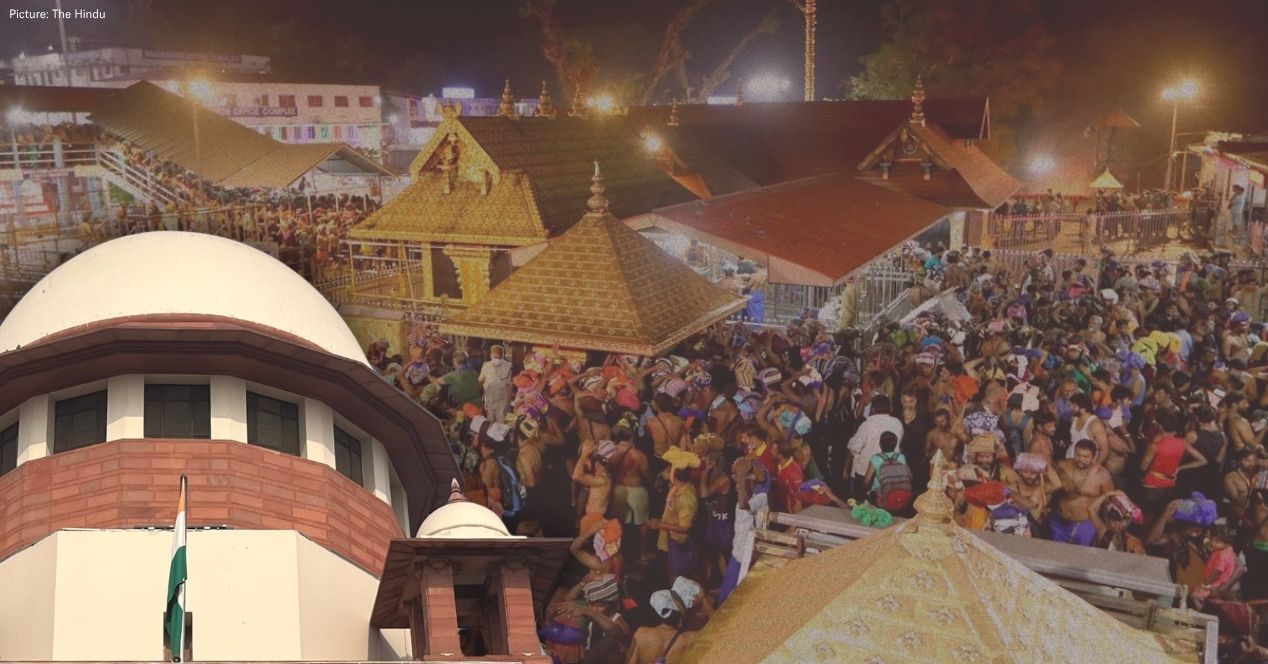
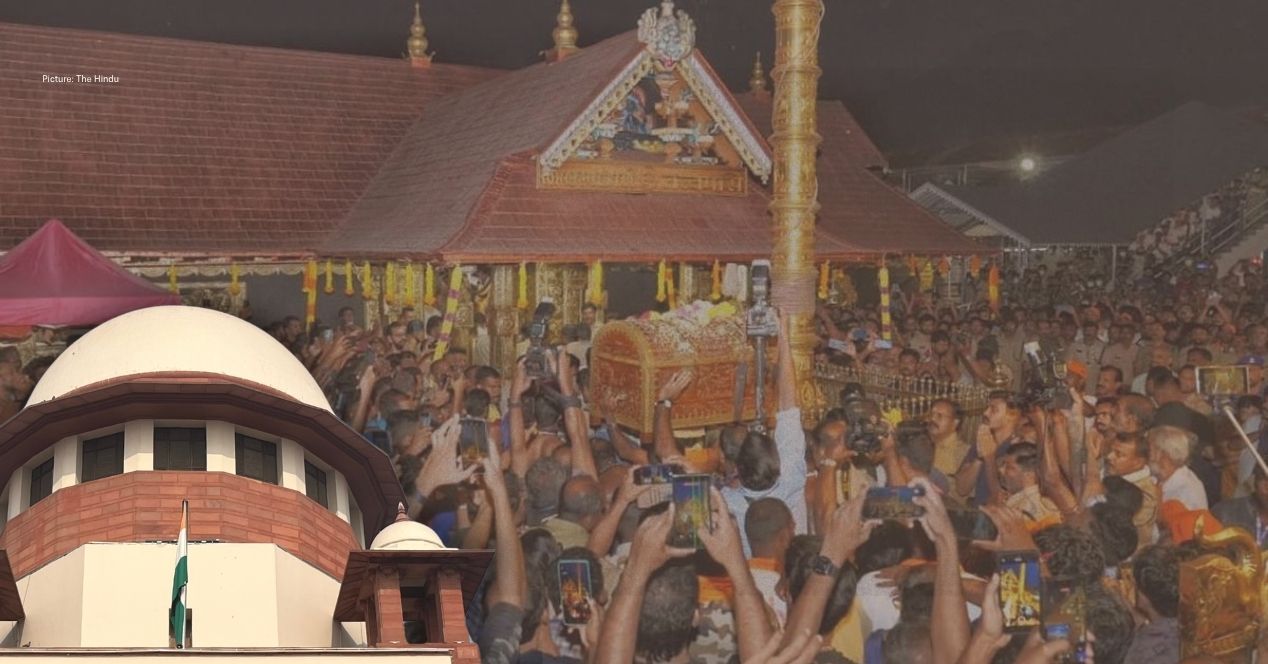
Sabarimala Reference | Day 15: Essential religious practices test faces challenges from both sides
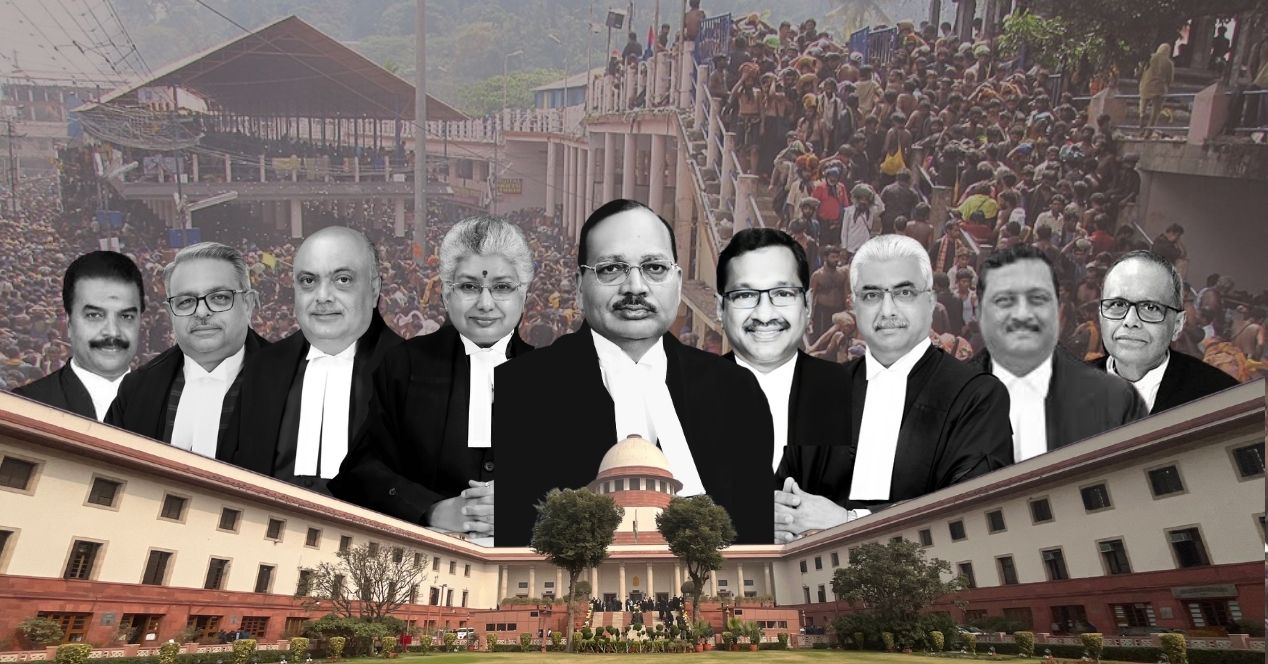
Sabarimala ReviewJudges: Surya Kant CJI, B.V. Nagarathna J, M.M. Sundresh J, Ahsanuddin Amanullah J, Aravind Kumar J, A.G. Masih J, P.B. Varale J, R. Mahadevan J, Joymalya Bagchi J
The essential religious practices (ERP) doctrine came under criticism from both respondents and review petitioners today in the Sabarimala Reference hearing. Respondents argued that the doctrine has narrowed religious freedom by shielding exclusionary practices from constitutional scrutiny. Rejoinder submissions contended that courts cannot decide whether a practice is “essential”, rational or progressive without entering the religious sphere.
Background
On 28 September 2018, in Indian Young Lawyers Association v State of Kerala, a Constitution Bench of Chief Justice Dipak Misra, Justices R. F. Nariman, A. M. Khanwilkar, D. Y. Chandrachud and Indu Malhotra, in a 4:1 majority, held that the Sabarimala Temple’s exclusionary custom prohibiting the entry of women is unconstitutional. The custom barred women between the ages of 10 and 50 years old from entering the temple. The Judgment held that the said custom, and Rule 3(b) of the Kerala Hindu Places of Public Worship (Authorisation of Entry) Rules, 1965 — which allowed religious denominations to exclude women from public places of worship based on custom, violated the fundamental right to freedom of religion of female worshippers under Article 25 of the Constitution. The Bench held that the devotees of Lord Ayyappa were not a separate religious denomination and that the custom was not an essential religious practice (ERP).
More than 50 review petitions were subsequently filed by various individuals and organisations including Kantaru Rajeevaru, the Chief Priest of the Sabarimala Ayyappa Temple, the National Ayyappa Devotees (Women’s) Association, the Nair Service Society and the All Kerala Brahmin’s Association.
After CJI Misra retired, the review petition was heard on 13 November 2018 by a Bench of CJI Ranjan Gogoi, and Justices Khanwilkar, Nariman, Chandrachud and Malhotra. On 14 November 2019, the review bench by a narrow 3:2 majority decided to keep the review petitions pending and referred certain overarching constitutional questions to a larger bench. The review will be decided after the questions are clarified. The majority found that the Sabarimala judgement will have a bearing on other freedom of religion cases. Justices Nariman and Chandrachud dissented, holding that this speculation went beyond the narrow scope of a review petition. They dismissed challenges against the review.
On 13 January 2020, a nine-judge Bench led by CJI S.A. Bobde and Justices, R. Banumathi, Ashok Bhushan, Nageswara Rao, Mohan M. Shantanagoudar, S. Abdul Nazeer, R. Subhash Reddy, B.R. Gavai and Surya Kant began hearing the reference. Parties raised concerns that a review bench cannot refer questions of law to a larger bench.
On 10 February 2020, the nine-judge Bench upheld the referral order issued in the November 14 judgement. It held that the Court had the power to refer a point of law to a larger bench in a review petition, however, it did not publish any reasons for this finding at the time. On 11 May 2020, the Supreme Court published a detailed judgement substantiating the maintainability of the reference.
On 16 February 2026, a Bench of CJI Surya Kant with Justices Joymalya Bagchi and Vipul Pancholi listed the case for arguments on 7 April 2026.
Key Issues
- What is the scope and extent of judicial review with regard to a religious practice as referred to in Article 25 of the Constitution of India?
- What is the scope and extent of the word ‘morality’ under Articles 25 and 26 of the Constitution of India and whether it is meant to include Constitutional morality?
- What is the scope and ambit of right to freedom of religion under Article 25 of the Constitution of India?
- Whether the rights of a religious denomination under Article 26 of the Constitution of India are subject to other provisions of Part III of the Constitution of India apart from public order, morality and health?
- What is the meaning of expression “Sections of Hindus” occurring in Article 25 (2) (b) of the Constitution of India?
- What is the inter-play between the rights of persons under Article 25 of the Constitution of India and rights of religious denomination under Article 26 of the Constitution of India?
Gopal: Reformist voices within religion have been “silenced”
Professor C. Mohan Gopal argued that the reference was an extraordinary opportunity for a “course correction” by interpreting the structure governing religious freedom. He submitted that reformist voices within religions were “silenced” for 75 years through constitutional interpretation. He submitted that the Court had wrongly approached the issue as a conflict between Part III fundamental rights and Article 26, ignoring reformative traditions arising within faith communities. Chief Justice Surya Kant observed that reform within religion would be protected under Article 15.
Referring to a 1947 proposal submitted by Dr. B. R. Ambedkar to the Constituent Assembly, Gopal pointed out that Dr. Ambedkar protected the rights to profess, preach and convert but omitted the word “practice”. He argued that many individuals were consumed by religion without voluntarily choosing denominational identities. Gopal warned that accepting the opposing interpretation would permit denominations to effectively secede from Part III. According to him, the real issue before the Court was faith in God versus faith in clergy.
Khanna: Denominational rules remain subject to judicial scrutiny
Senior Advocate Rakesh Khanna argued that religious denominations under Article 26 have collective rights flowing from Article 25 and cannot claim that they are immune from their obligations under Part III. Further, denominational rules framed under Article 26(b) remain subject to Article 13, which states that no laws shall be in derogation to fundamental rights. CJI Surya Kant observed that if Parliament and state legislatures are controlled by Part III, religious denominations cannot claim immunity above constitutional scrutiny. Justice Ahsanuddin Amanullah added that majoritarian notions of reform could be imposed upon smaller religious institutions sharing common beliefs. Khanna submitted that Article 26 protects autonomy in matters such as appointment of religious functionaries and internal administration, but does not confer plenary authority over bodily autonomy.
Padmanabhan: Group rights must remain subject to equality
Senior Advocate Prashant Padmanabhan argued that Article 25 is the genesis of the right to religion and Article 26 merely one of its facets. The interplay between Articles 25 and 26 points to a balance between individual liberty and denominational autonomy. Padmanabhan argued that the use of the word “person” in Article 25 must be read alongside Article 6 of the United Nations instruments such as the Universal Declaration of Human Rights (UDHR) and International Covenant on Civil and Political Rights (ICCPR), which recognise dignity and legal personhood. He submitted that any purification ceremony conducted after a woman’s entry into Sabarimala would violate her civil rights. According to him, group rights are only a form of liberty and must ultimately be balanced against equality. He argued that “all sections of Hindus” under Article 25(2)(b) excludes none.
Kalitha and Anand: Customs cannot remain immune from constitutional scrutiny
Advocate Sneha Kalitha argued that Article 26 cannot be treated as insulated from other fundamental rights. According to her, restrictions under Article 25(2)(b) are transformative in character and apply to Article 26 through doctrine of compatibility. Kalitha argued that customs rooted in notions of purity cannot remain immune from constitutional scrutiny in a transformative constitutional democracy.
Advocate Harshit Anand argued that proportionality and harmonious construction may fail in cases involving “hard claims” where competing fundamental rights arise within the same individual. He argued that constitutional morality becomes necessary in such situations because fundamental rights cannot be waived, even voluntarily. Referring to practices such as Santhara in Jainism, fasting unto death, and Sokushinbutsu, in Japan, where Buddhist monks meditate until death, he submitted that these cases involve conflicts between Article 21 rights to life and health and an individual’s assertion of religious freedom. According to him, proportionality may not resolve such conflicts.
Jaising: Doctrine of substantial inquiry over proportionality
Senior Advocate Indira Jaising concluding arguments for the Respondents submitted that the doctrine of proportionality has never been applied to resolve clashes between competing fundamental rights. She suggested the substantial inquiry test. According to her, the Court must first determine whether the injury to the right is substantial or minor. If the injury is minor, one right may temporarily give way and if the injury is substantial, the Court must determine which right prevails and which right must yield. She suggested that the Bench should continue with the existing framework of harmonisation, essential religious practices and substantial injury instead of replacing settled jurisprudence with proportionality analysis.
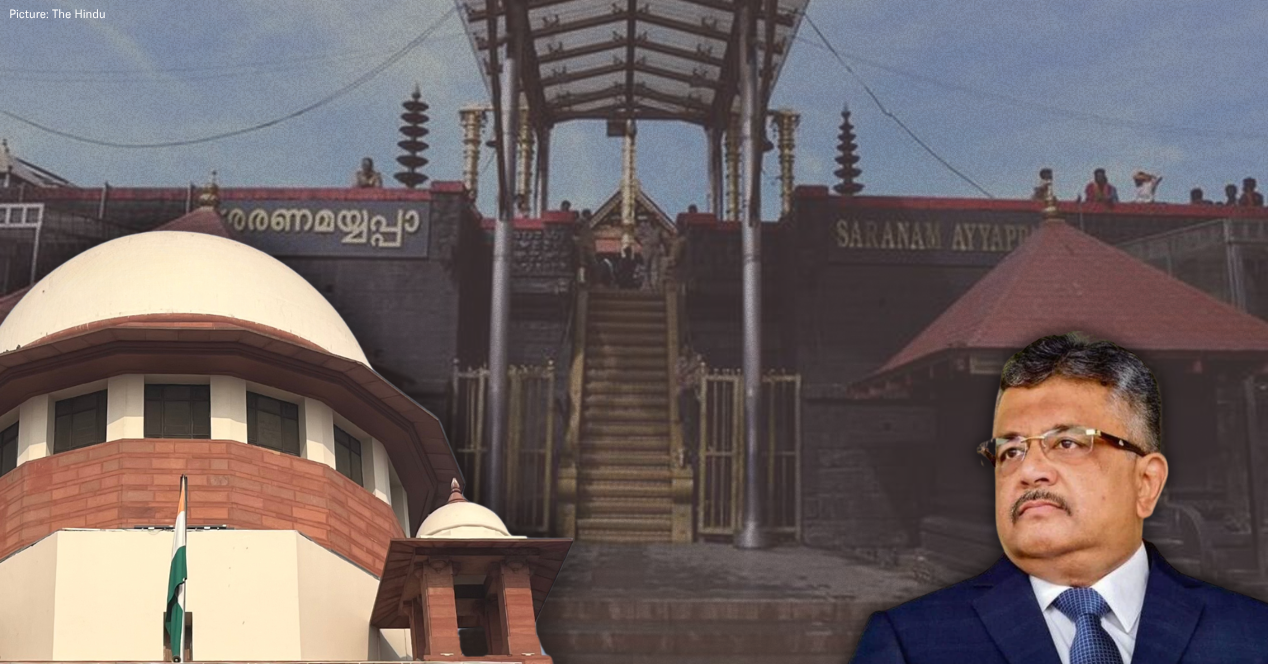
Mehta: Essentiality test narrows religious freedom
In rejoinder submissions, Solicitor General Tushar Mehta argued that courts have historically approached religious freedom from the wrong direction by first asking whether a practice is religious and then whether it is essential. According to him, the real inquiry should be whether a practice violates public order, health or morality under Article 25(1). Mehta argued that courts have consistently expanded the scope of fundamental rights over the years—Articles 25 and 26 remain the only provisions where protection has been narrowed through the Essential Religious Practices (ERP). Referring to the structure of the fundamental right chapter, Mehta argued that the Constitution groups Articles 25 to 28 together under the heading “Right to Freedom of Religion” and that treating Article 26 as a standalone provision would destabilise interpretation of other fundamental rights as well. Drawing an analogy with Article 29, which is not expressly made subject to Part III, he argued that accepting the opposing interpretation would render every provision lacking such express language as isolated. Justice Amanullah responded that Article 29 already protects citizens, which naturally includes everyone irrespective of sex or gender.
Mehta: Article 26 is the collective manifestation of Article 25
Mehta argued that Article 25 protects individual rights to profess, practise and propagate religion, whereas Article 26 represents the collective manifestation of those same rights. According to him, a person may practise religion without belonging to any denomination but Article 26 comes into operation once individuals subscribing to a common doctrine or mode of worship organize collectively. Justice M.M. Sundresh observed that courts must ultimately leave such questions to the collective wisdom of the belief. Justice B.V. Nagarathna asked whether Article 25(1) could truly be made subject to provisions such as Articles 14 and 17, observing that religion appears only in limited contexts within Articles 13 to 24. She remarked, “If we begin mixing everything into it indiscriminately, then there will be no religion left in this country.”
Mehta: Courts cannot become instruments of reform
On social reform Mehta argued that constitutional reform in religious matters is primarily entrusted to the legislature and not the judiciary. Referring to practices such as witchcraft and animal sacrifice, he submitted that legislatures are institutionally better equipped to undertake reform because laws enacted through democratic processes carry greater social acceptability. Justice Sundresh asked whether the word “law” in Article 25(2) necessarily refers only to legislation enacted by Parliament or state legislatures. Justice Joymalya Bagchi observed that where practices become “ultra-religious” and violate constitutional guarantees in undisputed factual situations, courts possess not only the power but the duty to intervene. Mehta agreed that judicial intervention remains possible where practices fall within constitutionally prohibited zones, but argued, “Review in religious matters must remain very, very restrictive,” because religion may not always possess a causal or rational connection capable of ordinary constitutional scrutiny. CJI Surya Kant observed that religious freedom cannot be reduced to questions of majority or minority faiths because all are protected under the Constitution. Justice Bagchi added, “Article 25 protects the rights of “all”…equally and freely”, irrespective of the numerical strength of the religious group involved.
Mehta: Courts should not apply ordinary Article 14 standards to religion
Mehta proposed a “judicial policy” for courts dealing with Articles 25 and 26. According to him, courts must first determine whether the activity in question is religious and then examine whether it violates public order, health, morality or any other provision of Part III. He argued that courts should not examine whether a practice is “essential” or “integral” to religion. According to him, constitutional morality was never intended to operate as an independent test for invalidating religious practices. He submitted that scrutiny under Articles 14 and 21 cannot proceed in the ordinary constitutional sense because religion may not always have a rational or causal basis capable of objective scrutiny. He contended that constitutional scrutiny in such cases must proceed from the perspective of believers rather than through conventional standards of arbitrariness or reasonableness under Article 14.
Vaidyanathan: Denominational rights are not derived from individual rights
Senior Advocate C.S. Vaidyanathan argued that Articles 25 and 26 recognise pre-existing rights and don’t confer new ones. Vaidyanathan argued that denominational rights under Article 26 would survive even if Article 25 were absent. He submitted that denominational rights are distinct from individual rights under Article 25 and do not require harmonious construction. Justice Sundresh questioned whether a denomination could qualify as a “person” within the constitutional scheme. Vaidyanathan responded that formal juristic personality was not necessary for denominations to hold rights under Article 26. Justice Nagarathna observed that social reform enters religious freedom through Article 25(2). Vaidyanathan responded that Article 25(2)(b) deliberately omits “sex” as a ground, which, according to him, reflects a conscious constitutional limitation on reform in matters of religion.
Singhvi: Article 25(2)(b) permits entry, not control over denominations
Senior Advocate A.M. Singhvi argued that the two limbs of Article 25(2)(b) dealing with “social welfare and reform” and “throwing open” Hindu religious institutions cannot be conflated. According to him, the Constitution consciously confined the “throwing open” clause to Hindu religious institutions of a public character because of the specific history of caste exclusion. He submitted that Article 25(2)(b) cannot be interpreted so broadly as to extinguish the core protections under Articles 25(1) and 26(b). He submitted that the essentiality test is unsustainable because it introduces limitations not found in the constitutional text. According to him, courts may examine whether a belief is genuinely held but cannot decide whether a practice is rational, progressive or essential to religion.
Kaul: Excommunication safeguards the authority structure of the faith
Senior Advocate N.K. Kaul argued that excommunication in the Dawoodi Bohra community could not be treated as a matter of social reform. Referring to Sardar Syedna, he submitted that the Constitution Bench had already recognised excommunication connected to religious practice as protected under Article 26.
Kaul disputed suggestions that excommunication was routinely imposed for trivial reasons and submitted that no excommunication had taken place within the community for nearly 60 years. CJI Surya Kant observed that courts ordinarily presume that legislation enacted by Parliament reflects a societal demand for reform. Kaul responded that the Court must still determine whether excommunication falls within the constitutional meaning of “social reform” under Article 25(2).
Sankaranarayanan: Article 25 cannot operate directly against denominations
Senior Advocate Gopal Sankarnarayanan argued that the error in later judgments lay in treating Article 26 as completely insulated from the rest of Part III. Referring to Devaru he submitted that the reasoning incorrectly treated Articles 25 and 26 as two provisions of equal authority without giving due effect to the phrase “subject to the other provisions of this Part” in Article 25. Sankarnarayanan argued that Article 25 should not be treated as a horizontal right enforceable directly against denominations. Article 25, he submitted, operates vertically against state interference with conscience and faith, whereas Article 26 protects denominational autonomy. He submitted that treating Article 25 as horizontally enforceable would permit individuals to directly challenge denominational rights under Article 26, creating consequences difficult to disentangle.
Pasha: Collective identity cannot be reduced to individual choice
Advocate Nizam Pasha argued that although Article 25 protects individual freedom of religion, denominational rights necessarily arise once individuals organise collectively around shared beliefs and practices. According to him, the constitutional scheme consciously preserves collective rights alongside individual freedoms because communities possess a right to self-preservation. Addressing allegations concerning excommunication, Pasha submitted that pleadings claiming informal “word of mouth” excommunication lacked sufficient factual foundation and could not withstand judicial scrutiny.
Shamshad: Any constitutional test will inevitably enter the religious sphere
Senior Advocate M.R. Shamshad argued that replacing the ERP doctrine with proportionality would not solve the underlying constitutional difficulty because courts would still be required to assess religious tenets in order to determine whether a restriction is disproportionate. Referring to Islam, Shamshad submitted that religious doctrines and texts must be examined in the manner understood within the tradition of the faith. He argued that Article 25(2)(a) already permits the state to regulate secular activities associated with religion through legislation, subject to subsequent judicial review. According to him, once such legislation is challenged, courts will necessarily have to determine the content of the relevant religious tenet in order to assess whether protected religious rights have been violated.
Tomorrow is expected to mark the conclusion of hearings in the matter, with rejoinder submissions by the review petitioners and submissions by the amicus curiae slated to be heard.